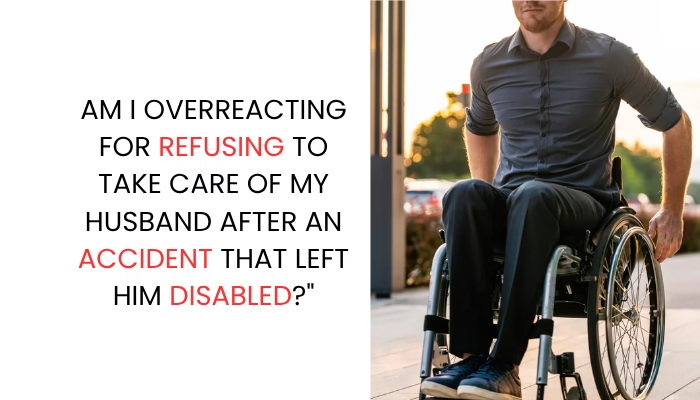
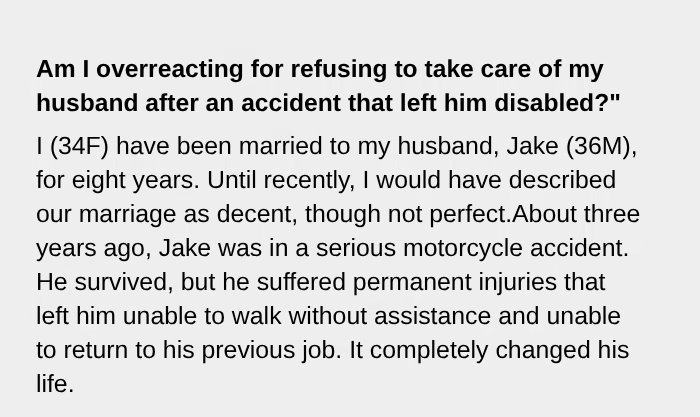
Am I overreacting for refusing to take care of my husband after an accident that left him disabled?”
Marriage is often described as a lifelong partnership, a promise to be there for each other in sickness and in health. Most people imagine it as a gentle, supportive journey filled with shared dreams, small joys, and mutual encouragement. But life doesn’t always follow the script we expect. Sometimes, unforeseen tragedies push couples into situations that challenge not just their relationship but their individual limits of patience, empathy, and endurance.
Am I overreacting for refusing to take care of my husband after an accident that left him disabled?”
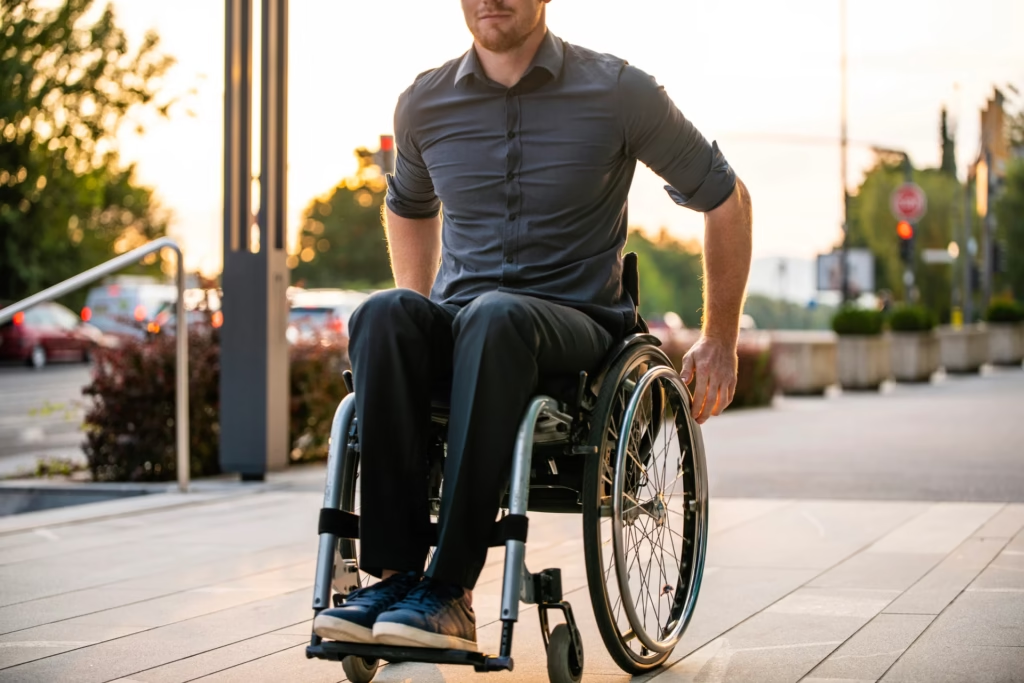
JohnnyGreig/Getty Images
This story, shared on Reddit’s r/AmIOverreacting, is about one woman’s struggle after her husband suffered a life-altering accident. It’s a tale that blends love, duty, burnout, and the difficult realization that caring for someone does not mean sacrificing your own mental health. Many readers will relate to the universal tension between loyalty and self-preservation, while others might feel conflicted about societal expectations surrounding marriage, disability, and caregiving.
As you read through this story, you’ll discover why this woman made the painful choice to step back, the reactions from friends and family, and the debate it sparked online about the limits of responsibility and love.
Related Posts
“Can’t Even Enjoy The Money”: Former Adult Star Wins $3M Settlement After Life-Changing Injury
WIBTA for asking my daughter’s boyfriend to stop having dinner with us?
AITA for “looking at my friend’s vagina”?
They Thought It Was A Harmless “Starfish”… But What Happened Next Left Everyone Shocked
Dad Called Heartless For Making Troubled Friend And His Baby Leave After Breaking His Only Rules
A Sudden Tragedy | Woman Refuses To ‘Take Care’ Of Disabled Husband After Auto Accident Since He Treats Her Like A ‘Servant’
For eight years, the woman, known only as OP on Reddit, described her marriage to Jake as “decent, though not perfect.” Life had its normal ups and downs, but the couple maintained a typical routine of shared responsibilities and companionship. That routine was shattered about three years ago, when Jake was involved in a serious motorcycle accident.
He survived, but the injuries were severe and permanent. He became unable to walk without assistance, and his career came to an abrupt halt. A man who had been active, independent, and self-reliant suddenly found himself facing a completely new reality, one that required help for almost every aspect of daily life.
The OP tried to help her husband in any way that she could.
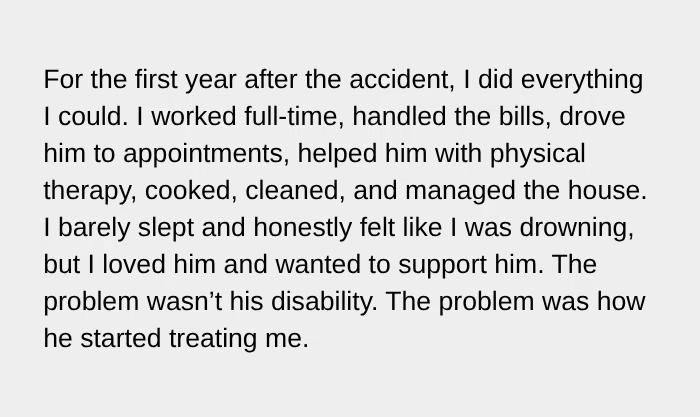
In the first year after the accident, OP committed herself entirely to Jake’s recovery. She worked full-time, handled household bills, drove him to medical appointments, assisted with physical therapy, cooked, cleaned, and maintained the home. Every minute of her day revolved around his needs. She barely slept, and exhaustion became her constant companion. And yet, she continued, driven by love and a sense of duty.
At this point, she was living the cliché of “in sickness and in health,” but real life would soon prove that the reality of caregiving is far more complicated than idealistic vows.
When Caring Becomes a Burden | The OP set a firm boundary.
At first, she believed her sacrifices were part of supporting someone she loved. But gradually, the burden became heavier, not just physically, but emotionally. Jake’s personality began to shift, and with it came a new kind of pain.
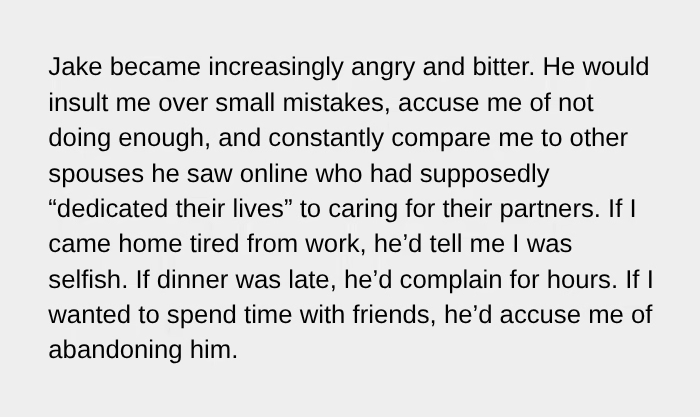
He started to display anger and bitterness, often directing it at OP rather than at the circumstances. Small mistakes, like a late dinner or a misplaced item, drew harsh criticism. He compared her to other spouses he read about online who had “dedicated their lives” to disabled partners, insinuating that she fell short of some arbitrary standard.
The emotional weight intensified. Coming home tired from work was met with accusations of selfishness. Wanting to spend a few hours with friends was framed as abandonment. Even ordinary challenges, like navigating a new routine after the accident, were turned into criticism of her as a wife.
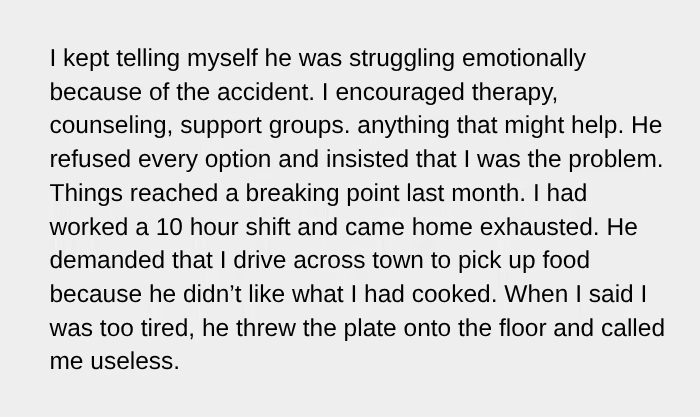
OP tried to rationalize Jake’s behavior. After all, he had suffered a traumatic, life-altering event. She encouraged therapy, counseling, and support groups anything that could ease the emotional strain he was experiencing. But Jake refused every option and insisted that the problem lay with her.
The physical toll was significant, but the emotional toll was catastrophic. The constant verbal attacks, unrealistic expectations, and lack of gratitude began to erode her sense of self-worth. What had started as caregiving now resembled servitude under a constant barrage of criticism.
The Breaking Point | Some sympathized with the OP and understood how she was feeling.
The defining moment came one exhausting evening. After working a 10-hour shift, OP returned home physically and mentally drained. She hoped for a quiet night, perhaps a simple meal and a chance to relax. Instead, Jake demanded that she drive across town to pick up food, because he disliked the dinner she had prepared.
When she told him she was too tired, Jake threw the plate to the floor and called her “useless.” In that instant, years of suppressed frustration, exhaustion, and emotional abuse came rushing forward. OP realized she had been putting her own well-being on hold while being subjected to constant disrespect and unrealistic demands.
It was the moment she understood a harsh truth: loving someone does not mean sacrificing your own mental and physical health indefinitely.
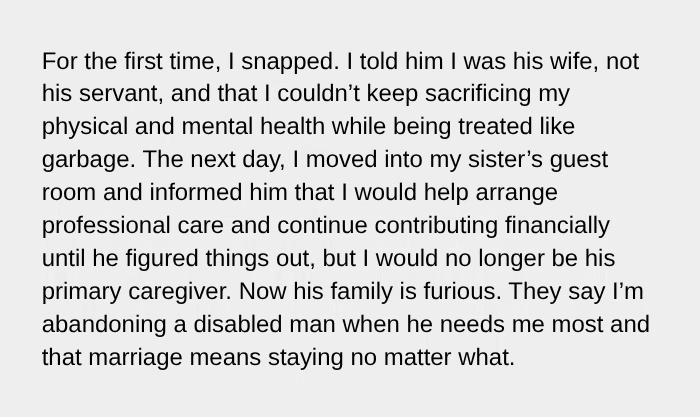
The next day, she made a difficult but decisive choice. She moved into her sister’s guest room, a safe space where she could regain some control over her life. She informed Jake that she would help arrange professional care and continue contributing financially until he could adjust to the new reality, but she would no longer serve as his primary caregiver.
Reactions and Backlash | Others encouraged the OP to move on from this relationship, especially since her husband had a whole circle of family and friends there to support him.
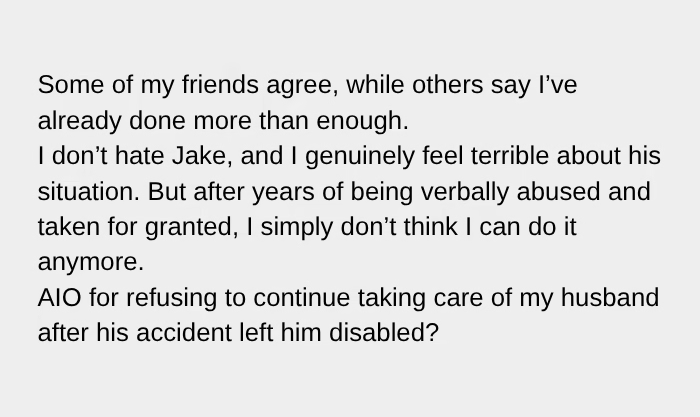
Unsurprisingly, Jake’s family was furious. They accused OP of abandoning a disabled man at his most vulnerable moment. Some friends agreed with the family, insisting that marriage vows implied absolute, unconditional commitment. Others recognized that OP had already given years of care beyond what most people could manage and that her decision was both understandable and necessary.
The online community on Reddit responded with overwhelming support. Users highlighted the caretaker burnout that often comes from long-term caregiving and emphasized that OP’s actions were reasonable and responsible, not selfish. Many pointed out that marriage does not excuse verbal abuse, entitlement, or the refusal to seek professional help when needed.
Commenters stressed that her well-being mattered just as much as Jake’s, and that setting boundaries does not equate to abandoning someone. In fact, allowing professionals to handle his care could ensure that Jake receives consistent, respectful, and specialized support — something OP, exhausted and emotionally drained, could no longer provide.
Despite the backlash, OP does not hate Jake. She still feels empathy for the challenges he faces and acknowledges that his accident was a tragedy. However, she also recognizes that years of verbal abuse, unrealistic expectations, and emotional neglect had eroded the marriage’s foundation.
For OP, the decision to step back was not made lightly. It was a balancing act between compassion and survival, between caring for someone she loved and protecting herself from becoming a victim of continual emotional harm.
This situation illustrates a difficult reality many caregivers face: the line between support and self-sacrifice is fragile, and societal expectations often make it hard to see when personal boundaries are necessary. OP’s story challenges the assumption that love always means enduring abuse or exhausting yourself entirely for someone else.
Lessons About Caregiving and Marriage
Several themes emerge from this story:
- Caregiving can lead to burnout: Even when motivated by love, the cumulative physical and emotional demands of supporting someone with a disability can overwhelm an individual. Professional help, respite care, and support networks are essential.
- Abuse is never acceptable: Verbal attacks, unrealistic expectations, and emotional manipulation are forms of abuse, regardless of the circumstances. No one should have to endure continuous disrespect under the guise of love or duty.
- Marriage vows have limits: “In sickness and in health” does not mean sacrificing your well-being or enduring mistreatment. Healthy relationships rely on mutual respect, effort, and emotional support, not unilateral caregiving under duress.
- Empathy and boundaries can coexist: Caring for someone does not require sacrificing your own health. Establishing boundaries, seeking help, and ensuring fair arrangements can protect both the caregiver and the person receiving care.
- Societal expectations can be harmful: Friends, family, and communities sometimes pressure individuals to meet impossible standards of devotion, ignoring the toll it takes on their lives. Recognizing and resisting these pressures is crucial.
Why This Story Resonates
Many readers find themselves torn between sympathy for Jake’s situation and admiration for OP’s courage. It resonates because it is intensely human, illustrating the complexity of relationships, care, and moral responsibility.
The story raises questions that are difficult to answer:
- When does loving someone become self-destructive?
- How should one balance empathy with self-preservation?
- What responsibilities does society assign to spouses when life takes an unexpected turn?
OP’s narrative is both a cautionary tale and a reflection of real-world struggles faced by caregivers, spouses, and families confronting sudden disability and long-term dependency.
OP is navigating a challenging path. She continues to provide financial support while arranging professional care, showing that stepping back does not mean abandonment. She is reclaiming her life while still offering assistance sustainably and respectfully.
Meanwhile, she contemplates the long-term implications: whether reconciliation is possible, whether boundaries will hold, and how she can maintain her emotional and physical health while navigating a complex family dynamic.
FINAL THOUGHTS
Love and commitment are often romanticized, but real-life relationships can test human endurance in ways few anticipate. OP’s experience shows that caring for someone does not require sacrificing your identity, health, or dignity. Sometimes, the hardest decision is the one that preserves your own well-being, even when it conflicts with social expectations.
What do you think? Was OP wrong for stepping back, or was this an inevitable choice after years of verbal abuse and unrelenting pressure? Could her actions be a model for responsible caregiving, or do they reveal a failure to live up to marital vows?
We want to hear your thoughts. Is there a line between love and self-sacrifice, and who gets to define it? Share your opinions and experiences below; sometimes, the best lessons come from honest conversations about the hardest choices in life.