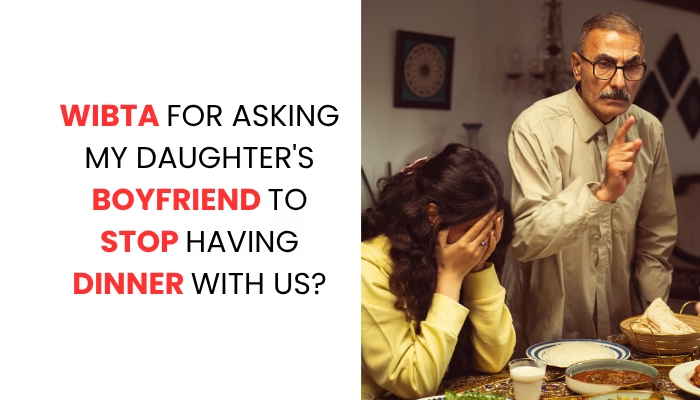
WIBTA for asking my daughter’s boyfriend to stop having dinner with us?
Family dinners are supposed to be a place where people come together, share stories, and make new family members feel welcome. For many families, inviting someone to the dinner table is a simple way of showing acceptance and kindness.
But sometimes, a small habit can slowly turn into a bigger family problem. When the same unusual behavior happens again and again, people may start questioning whether they should ignore it or finally set a boundary.
One mother found herself facing exactly this situation. Her daughter’s boyfriend had been joining their family meals for years, but there was one strange thing nobody could explain he never actually ate his food. Now, after watching countless meals end with untouched plates being thrown away, she is wondering if she would be wrong for asking him not to come to family dinners anymore.
Mom Wants To Stop Daughter’s Boyfriend From Joining Family Dinners Because He Never Eats His Food

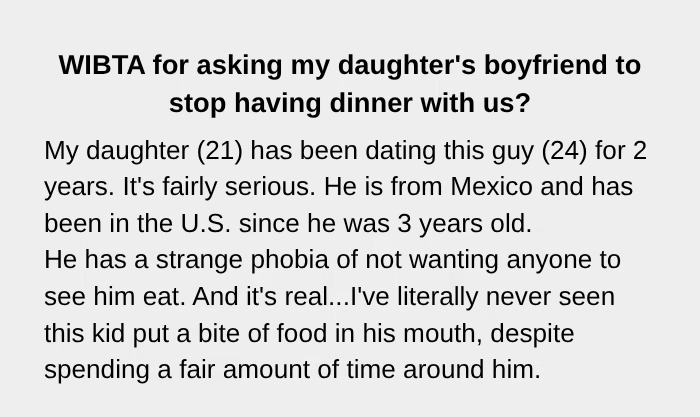
The mother explained on Reddit that her 21-year-old daughter had been dating her 24-year-old boyfriend for about two years. Their relationship seemed serious, and the family generally liked him.
She described him as polite, respectful, and someone who treated everyone kindly.
However, there was one behavior that had confused the family from the beginning.
He refused to eat in front of other people.
The mother said that even after knowing him for years, she had never once seen him actually take a bite of food during a family meal.
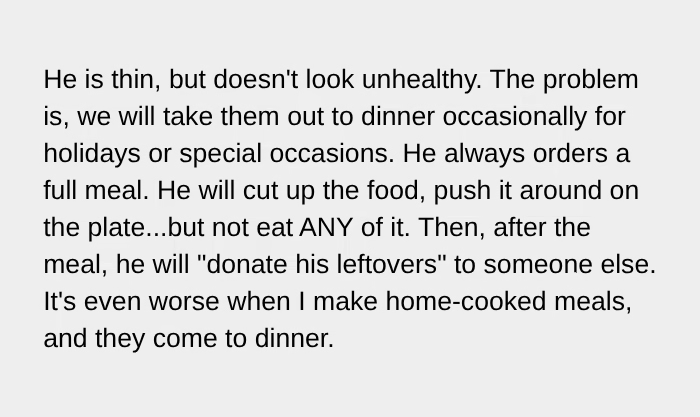
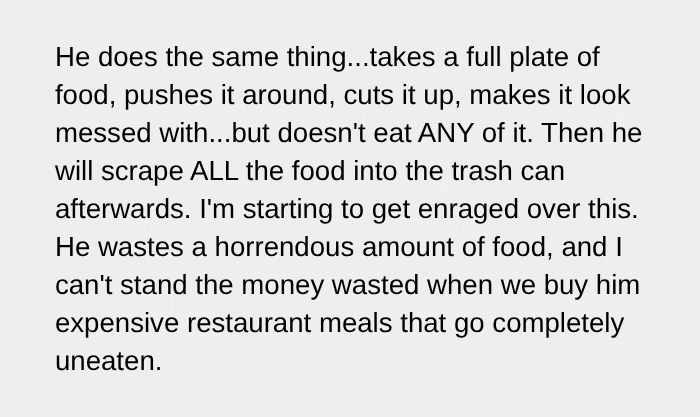
At restaurants, he would order a full meal like everyone else. But once the food arrived, the same pattern would begin.
He would cut the food into small pieces, move things around his plate, and make it appear as if he was eating.
But he never did.
When the meal was finished, his plate looked almost the same as when it arrived.
Related Posts:
- AITA for “looking at my friend’s vagina”?
- AITA for sitting near a breastfeeding mother at a park?
- Woman Claps Back At Overweight Roommate After She Calls Her A ‘Skinny B*tch’ First
The Family Started Feeling Frustrated By The Food Waste
At first, the mother tried not to judge him.
She assumed maybe he was nervous, had a small appetite, or simply needed more time to feel comfortable around the family.
But the situation continued.
When he visited their home for dinner, the problem became even more noticeable.
The mother would prepare meals for everyone, and he would put food on his plate just like the others.
Then, after spending the entire meal moving the food around, he would throw it away untouched.
Over time, the mother became upset.
She explained that the problem was not that he did not want to eat. She did not want to force anyone to eat something they were uncomfortable with.
The frustration came from watching good food repeatedly go into the trash.
She also worried about the money being spent on meals that were never consumed.
Restaurant Staff Even Started Noticing Something Was Wrong
The mother said the situation had become so noticeable that even restaurant workers sometimes commented on the untouched plates.
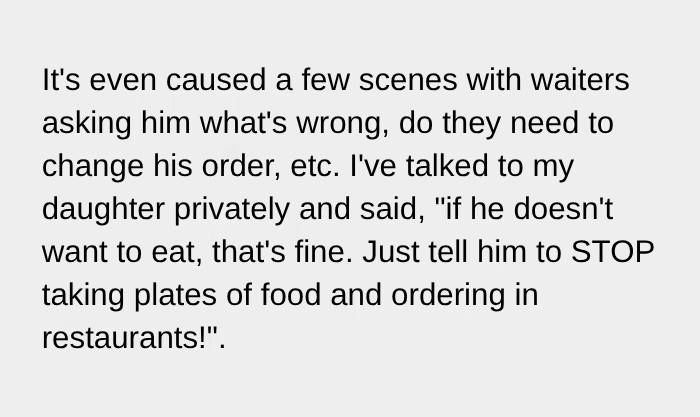
Servers would ask if something was wrong with the food or whether he disliked the meal.
But the issue was not the cooking.
He simply would not eat.
For the mother, this created an uncomfortable situation because she felt like everyone around them noticed the strange behavior.
After dealing with it for a long time, she decided she could no longer stay silent.
She Asked Her Daughter To Talk To Him
Instead of confronting the boyfriend directly, the mother spoke privately with her daughter.
She explained that she was not trying to embarrass him or force him to eat.
She simply wanted him to stop ordering large meals or accepting full plates of food if he already knew he would not touch them.
She suggested that he could order something smaller, explain his situation, or find another way to avoid wasting food.
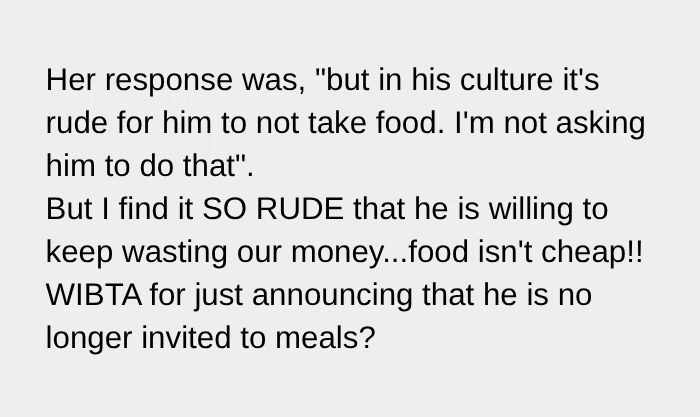
However, her daughter defended him.
She explained that refusing food could be considered disrespectful in his culture, and she did not want him to feel like he was being rejected by her family.
The mother understood her daughter’s point.
She knew there might be a deeper reason behind his behavior.
But she still struggled with the idea of continuing to spend money on meals that were immediately thrown away.
Reddit Users Wondered If The Problem Was Bigger Than Food
After sharing her situation online, the mother received many different opinions.
Some Reddit users agreed with her and said that repeatedly wasting food was frustrating, especially when someone else was paying for it.
They believed he should communicate better instead of pretending to eat.
However, many others thought there could be something much deeper happening.
Some commenters suggested that his behavior might be connected to anxiety, a fear of eating around others, or another personal struggle that he could not easily control.
They argued that the family should focus less on the wasted food and more on understanding why he felt unable to eat in front of them.
Several people also pointed out that banning him from family dinners might make the situation worse and could make him feel even more isolated.
Family meals are not only about the food on the table. They are about connection, comfort, and making people feel accepted.
The mother’s frustration is understandable. Watching meals go untouched for years would be difficult for many people.
At the same time, the boyfriend’s behavior may come from a much deeper issue that deserves patience and understanding rather than embarrassment.
The real question may not be whether he should eat the food, but whether the family has tried to understand why he cannot.
What do you think? Should the mother continue inviting him to family dinners, or is it reasonable for her to set a boundary after years of wasted food?
WIBTA for asking my daughter’s boyfriend to stop having dinner with us?
The Daughter Found Herself Caught Between Her Family And Her Boyfriend
The mother was not the only person affected by the situation. Her daughter was also placed in a difficult position because she understood both sides of the argument.
On one hand, she knew her family was becoming frustrated. She could see the wasted food, the awkward restaurant moments, and her mother’s growing disappointment.
But on the other hand, she cared about her boyfriend and believed there was a reason behind his behavior that others did not understand.

She Believed He Was Not Trying To Be Rude
According to the mother, her daughter did not think her boyfriend was intentionally disrespecting the family.
She believed he was making an effort to participate.
By accepting food and sitting at the table, he was trying to be part of the family experience, even if eating was something he struggled with.
Her daughter also explained that cultural expectations might play a role.
In some families and cultures, refusing food when someone offers it can feel impolite. She worried that asking him to decline meals could make him feel uncomfortable or unwelcome.
The Family Had To Decide Between Boundaries And Understanding
The situation left everyone facing the same difficult question.
How much should a family accommodate someone’s unusual behavior, and when is it reasonable to ask for change?
The mother felt she had already been patient for years. She believed she had shown kindness but also deserved to have her concerns taken seriously.
Her daughter felt that pushing too hard could hurt someone who might already be dealing with a personal struggle.
Neither side wanted to create conflict, but they viewed the situation from completely different perspectives.
Many commenters believed the family needed a more honest conversation.
Instead of focusing only on the wasted food, they suggested asking the boyfriend what made eating around others difficult for him.
Some readers pointed out that he might have been hiding a serious issue because he felt embarrassed.
Others agreed that the family also had the right to express how his actions affected them.
They believed compassion and boundaries could exist at the same time.
A Simple Dinner Problem Revealed A Much Bigger Issue
What started as a disagreement about unfinished meals became a conversation about acceptance, communication, and understanding people’s hidden struggles.
The family was not just deciding what should happen at the dinner table.
They were deciding how they wanted to treat someone who had become an important part of their lives.